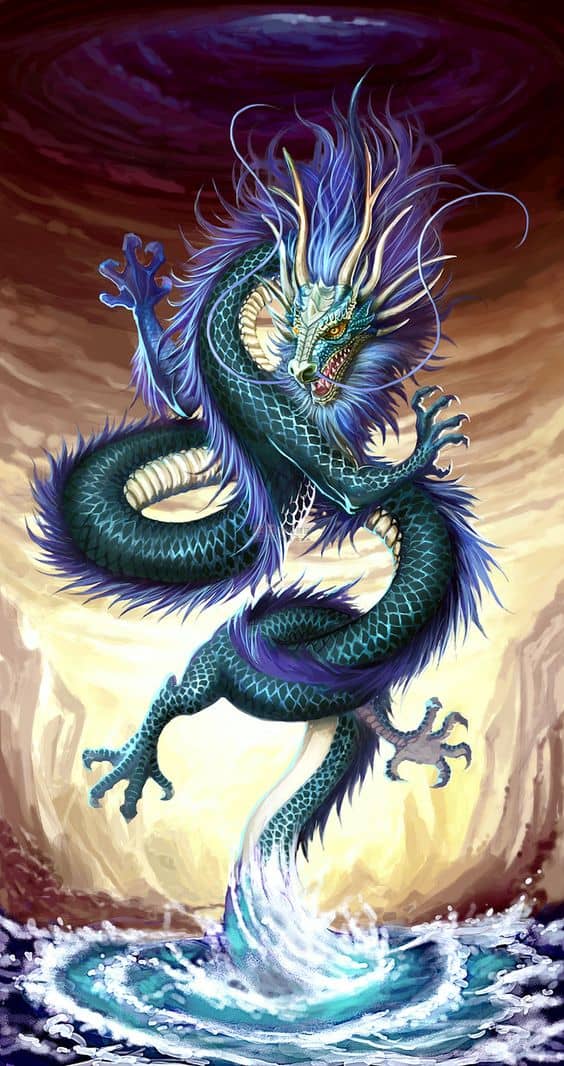
The Chinese Dragon: A Loong Time Coming
Upon the flag of the Qing Dynasty rests the Azure Dragon, representation of the east and spring. Also called a loong, long, or Imperial dragon, the dragon is an important symbol in Chinese culture. Symbolizing the emperor, the people of China as a whole, and power, dragons are auspicious signs of fortune and grace.
Liu Bang, the founder of the Han Dynasty, claimed to be the son of a dragon after his mother dreamt of a dragon and became pregnant with him. Later emperors wore robes featuring dragons, with specific dynasties (the Yuan, Ming, and Qing) restricting the use of the dragon motif only for the emperor and sometimes the princes. During China’s time under British rule, the dragon was part of China’s coat of arms. Today, China and its people are synonymous with the dragon.
The loong differs from the classical Western dragon in various ways. While both are serpentine and possess legs, the similarities end there. Chinese dragons (and Eastern dragons as a general whole) resemble snakes with added features. According to Chinese scholars, dragons are made of various animal parts; the most common description goes as thus: a dragon contains the neck and body of a long snake, horns of a deer, ears of a bull, eyes of demon, head of horse, scales of a carp, belly of a clam, feet of a tiger, and claws of an eagle. Classical depictions also show carp whiskers, flowing manes like a lion’s, and feathered tails. The dragon is also shown with a glowing pearl under its jaw or in its clawed hands, a symbol of power, wisdom, spiritual energy, and immortality. Each of these features is rooted in Chinese culture’s animal symbolism, coalescing into a beast of pure power, wisdom, and benevolence.
That is another difference between the Eastern and Western dragons. While the West views dragons as violent, rude beasts that hoard wealth and kidnap princesses, the East sees dragons as benevolent, kind rulers of water and air. Many Eastern dragons are sought for wisdom, to change fate, bestow gifts, or grant fortune.Upsetting a dragon does have the consequences of floods, tidal waves, and storms, however, but hardly ever fire unless it results from a lightning strike.
As beasts of air, water, and storms, dragons are powerful beings. Said to be the rulers of water, they are worshipped alongside rivers, beneath waterfalls, next to oceans, and during rainstorms.
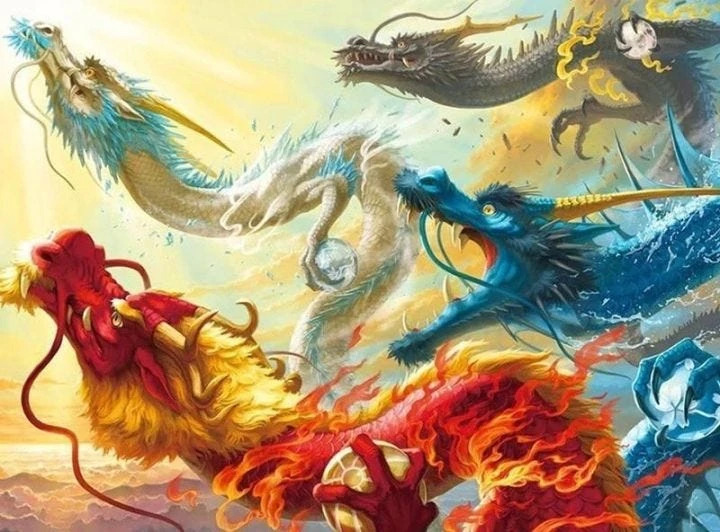
The four major Dragon Kings represent four important seas or oceans in Chinese mythology: the East Sea (the East China Sea) ruled by the Azure Dragon Ao Guang, the South Sea (the South China Sea) ruled by the Red Dragon Ao Qin, the West Sea (the Indian Ocean) ruled by the White Dragon Ao Run, and the North Sea (Sea of Japan and the Arctic Ocean) ruled by the Black Dragon Ao Shun. One dragon rules over them all, the Yellow Dragon of the center (China), who is associated with the Jade and Yellow Emperors. Many other dragons are named in myths and stories, but these are five of the main dragons in ancient times.
In modern times, the Chinese people celebrate their draconic ancestry by performing dragon dances and dragon boat races, as well as celebrating a single year out of a 12-year cycle by dedicating it to the mythical dragon. The racing and dancing commonly occur during Chinese New Year, celebrating the arrival of a new time and wishing for luck during the future. Movements (rowing, dancing) are accompanied by drums and shouts, reminiscent of the thunder rumbling the skies or the crash of waves of draconic power.
Children born under the Chinese zodiac sign of the Dragon are said to be charismatic, confident, and powerful leaders. They are fiercely intelligent, ambitious, fearless, generous, and perfectionists. However, they can also be narcissistic, demanding, and impatient if not raised correctly. More children are born during the Year of the Dragon, as they are said to be lucky and have characteristics for a good life.
The Chinese loong has existed for millenia, stretching back to the origin of the Chinese people themselves. Today, it is a cultural symbol for an entire population, guiding them towards power, wisdom, and prosperity.
See the following article for more information about the Chinese dragon:
Discovering the Long
Ryujin: Bringer of Rain and Thunder
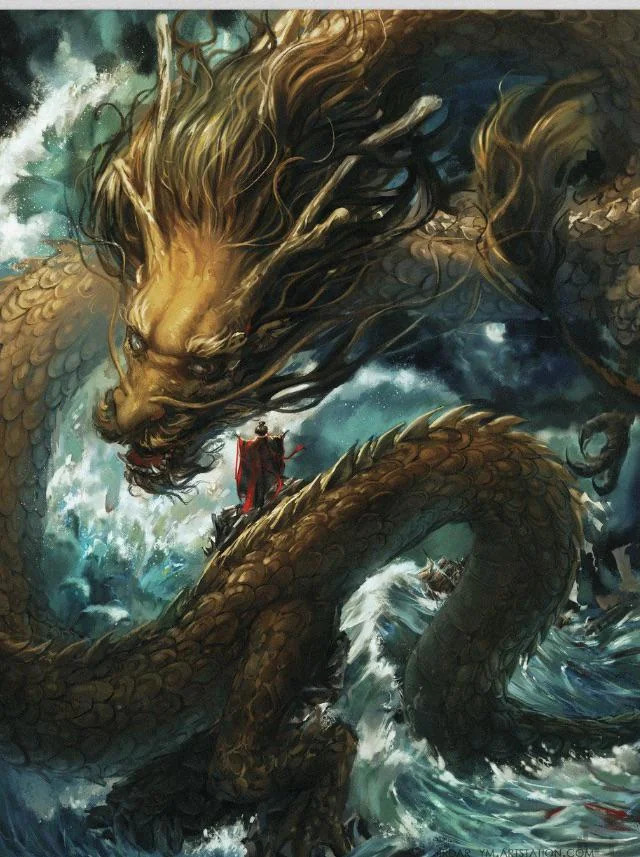
A Japanese dragon named Ryujin is said to be the god of the sea, bringer of rain and thunder, and teacher of medicine. As a water deity, he had much power over the island-bound Japanese people, gifting them the ocean’s bounty of fish and destroying a Mongolian fleet that was sent to attack his people. He is a popular ujigami, or patron god, of several family lines in Japanese mythology.
There are several stories about Ryujin, his creations, and human companions. In one story, he removed the bones from the jellyfish as punishment for failing orders of capturing a monkey, which the god needed to heal a certain rash. In another, he set out to fight a yokai (Japanese demon, ogre, or spirit) with the help of Tawara Toda. When the man defeated the yokai, Ryujin awarded him with legendary armor, weapons, endless silk, an inexhaustible bag of rice, and a copper bell. A third story tells of the Japanese Empress Jingu using some of Ryujin’s legendary Tide Jewels to defeat the Korean navy by taking the water out from under their boats then bringing it back, drowning the men without harm to her own.
Ryujin’s daughter is the beautiful princess Otohime, who entertained the mortal Urashima Taro in the god’s underwater palace made of coral after he saved an injured turtle. After only staying in the palace for a few days, he discovers 100 years have passed in the above world. After he opens a gift box from Otohime, he becomes old and passes away.
Ryujin is worshiped in Shintoism in the belief of Ryujin shinko, dragon god faith
, in which dragons are praised as water kami (analogous to gods). The thunder god has shrines across Japan, especially in rural areas, where his domain control over fishing and agricultural rain are important for the communities to this day.
Rong: Forefather of the Vietnamese People
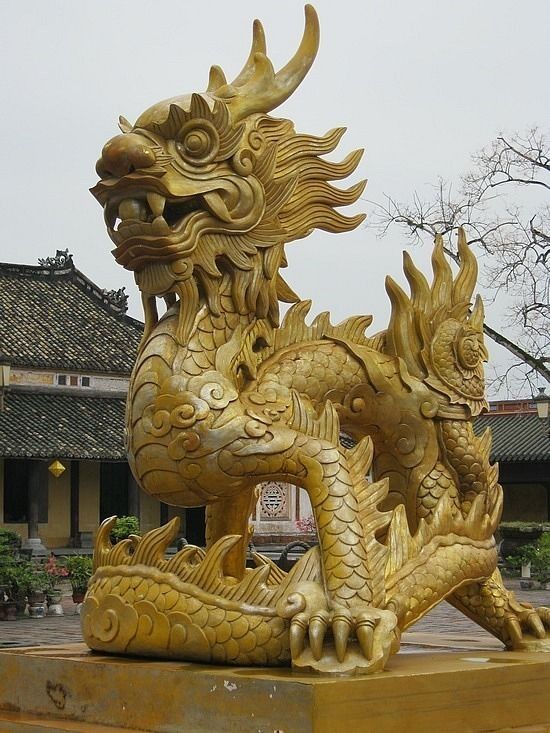
The ancient king of the dragons, Lac Long Quan, married a mountain snow goddess named Au Co. She became pregnant and laid 100 eggs, which later hatched into 100 sons. Unfortunately, because Lac Long Quan is a dragon and Au Co is a goddess, they could not be together forever in peace, as they were as incompatible as fire and water. So, Lac Long Quan took fifty of his sons to the sea, and Au Co took fifty of her sons to the mountains. Their first-born son, later called Hung Vuong, became the first emperor of what would be known as Vietnam.
A Vietnamese proverb tells of this story simply, saying Con Rong, chau Tien
, meaning Children of Dragon, Grandchildren of Immortal
.
There have been many variations of the Vietnamese dragon. The first conception was of a crocodile-snake-cat-rat-bird hybrid, fashioned after the idea of viscous crocodiles as kinds of dragons. Some depictions show a snake with a crocodile head, and others show a snakelike creature with cat whiskers, wings, and a backfin.
The Ly Dynasty created one of the staples of the modern dragon: a long, sinuous body with 12 sections, which symbolize the 12 months of the year. The fins lining the dragon’s spine are small and rectangular. The beast possesses a long mane, beard, big eyes, a forward-pointing nose crest, and no horns. It has three toes on each of its four feet. The dragons are always depicted with a chau (a jewel symbolizing humanity, nobility, and knowledge) in their mouths. The dragons of this dynasty were known to change the weather and control crops.
The Tran Dynasty added arms and horns to the dragons, shortened the crest, and created variances in scale and tail designs. The dragons of this time period symbolized martial arts.
The Le-Mac Dynasty developed the more modern rong. These dragons represented the curves of clouds, both storm and normal, and the posture of others. They had lion heads and large noses, no fiery crests, curves in two sections, and five-clawed feet.
The Nguyen Dynasty was the last to change the dragon image. This dragon is very similar to the Chinese loong, possessing the face of a lion, horns of a deer, sharp teeth, curved whiskers, and fish scales along its serpentine body. Like the loong, the emperor was symbolized with a five-clawed dragon and the princes with four-claws. The dragons of this dynasty represented the southern emperors with glory and honor.
The rongs of Vietnam are beings of water and air, forces of yang energy, crop growth, prosperity, life, and growth. They remain a symbol of Vietnam throughout its history and modern time.
See the following article for more information about the Vietnamese dragon:
Dragons in Vietnamese Culture